
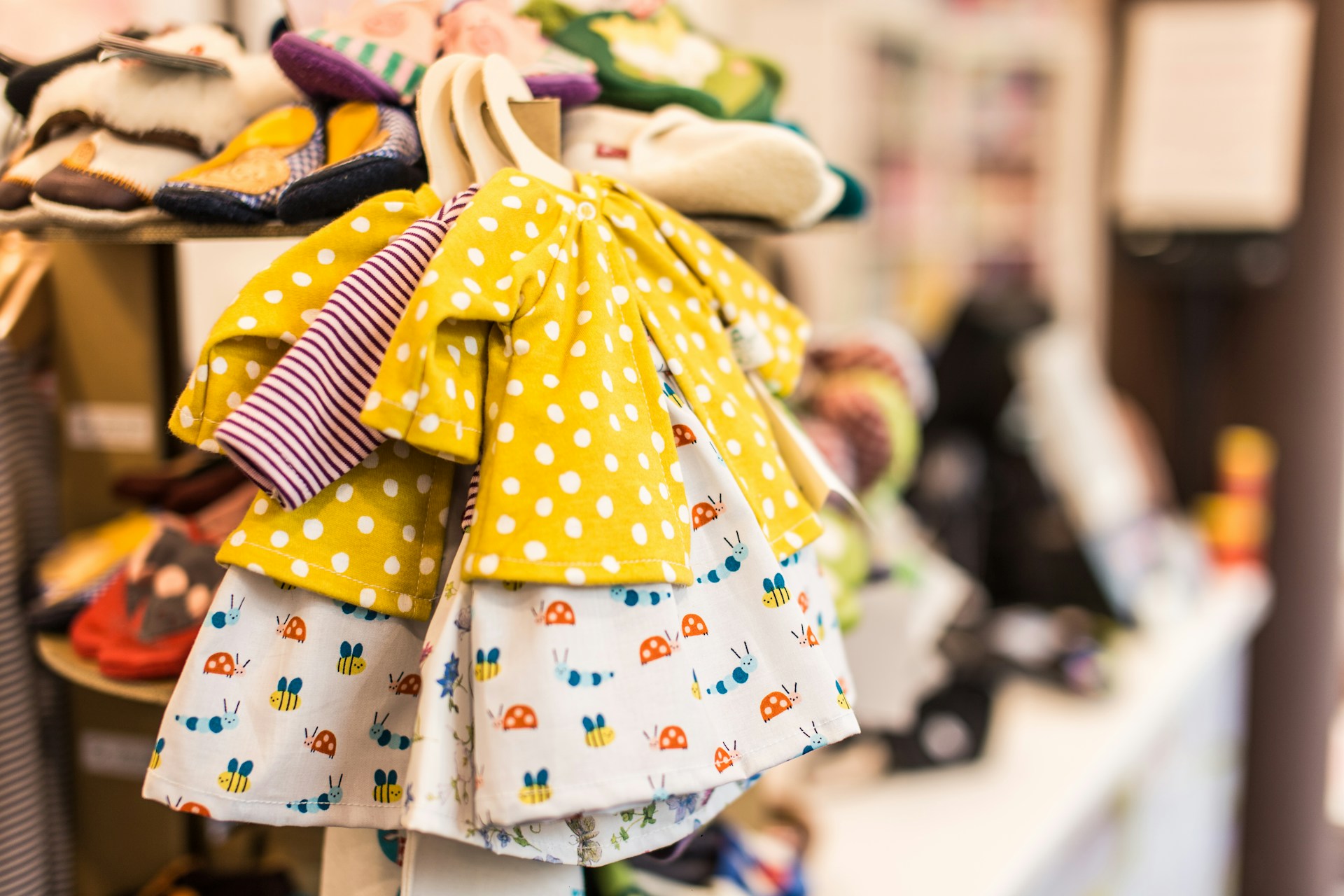

If you’ve ever ordered a size 2T for your two-year-old and received something that fit your four-year-old, you aren’t doing it wrong. Toddler clothing sizing is inconsistent across every brand, from every country, and parents shopping in Nepal face an extra layer: garments arrive from different manufacturing regions, each following their own logic. Sometimes the label and the actual garment tell completely different stories.
Why Toddler Sizes Don’t Match
Age labels on children’s clothing are not a universal standard. A garment labeled 2T from one brand and 2T from another can differ by several centimetres in chest width, waist circumference, and leg length. Age labels assume a child at the 50th percentile growth curve, meaning roughly half of all children won’t fit their correct age in any given brand.
The confusion compounds online. Parents have reported ordering a size 4-5T for their grandson only to find pants double the expected length. Others ordered size 3-4 and found it fit a two-year-old. One listing on a major marketplace included this note from the manufacturer itself: “The size of the clothes are relatively smaller, it is recommended to choose a larger size.” Not a defect. A sizing system calibrated to a different standard.
Three Sizing Systems, One Wardrobe
Most parents shopping for toddlers in Nepal encounter three different sizing systems without realising it.
Age-based sizing (Nepal, India, most South Asian brands): Labels like 6-12 months, 1Y, 2T, 3-4Y. These are approximate ranges based on regional growth averages.
Height-based sizing (European imports): European brands skip age labels entirely. A size 90 on a European garment maps to approximately 2T in South Asian terms. The number refers to the child’s height in centimetres. Parents who see “90” on a label without knowing the conversion are essentially guessing.
Asian sizing (Chinese, Korean manufacturers): Clothing from China and South Korea typically runs one to two sizes smaller than Western equivalents. A “3T” from a Chinese manufacturer is not the same garment as a “3T” from an Indian brand. The calibration differs because average child proportions differ. For Nepali parents, Indian-manufactured children’s clothing often fits best. Indian sizing accounts for the fuller abdomen typical of South Asian toddlers, waistbands are cut generously, and leg length is calibrated against actual children in the region. Parents frequently find imported pants bunching at the ankle. Indian-made equivalents sit correctly.
What “24 Months” and “2T” Actually Mean
In most brands, 24-month sizing is built closer to baby proportions: more room in the seat and nappy area, slightly shorter overall. 2T leans toward toddler proportions: longer in the leg, narrower in the seat.
If your child is still in nappies, 24-month sizing usually fits better, even at two years old. Once out of nappies, 2T tends to sit correctly.
Nepal’s Seasons and What Your Toddler Actually Needs
Kathmandu Valley and the hills: Winter runs November through February. Temperatures drop to near single digits overnight, and most homes are not centrally heated. Two layers of cotton with an inner fleece jacket is the practical standard for a toddler sleeping in an unheated room. A thin cardigan alone is not enough in January. Summer is mild, 19 to 27 degrees, cooling in the evening. Single-layer cotton works during the day. Monsoon (June through August) brings humidity as the main challenge. Cotton stays the priority fabric because synthetics trap heat and moisture against the skin. Plan for more frequent washing.
Terai: A different temperature register entirely. Hot and humid for most of the year, 25 to 35 degrees Celsius. Light breathable cotton year-round. Wool and fleece have almost no application except in December and January.
Shopping in Nepal: What to Know
Check the garment’s origin, not just the label. A garment labeled 3T made in China and one labeled 3T made in India for the South Asian market are not the same thing. The label tells you the target size. The origin tells you how to read it.
When in doubt, size up. The variance between brands and origins is large enough that buying one size up rarely results in a garment too large by more than a season. Buying true to size and discovering it doesn’t fit is the more expensive mistake.
For newborns, buy a mix. Newborn clothing in Nepal tends to skew toward smaller builds. If your baby is average weight or above, some 0-3 month items will be snug from the start. Having a mix of newborn and 0-3 month pieces on hand is safer than stocking one size entirely.
Iron new garments before the first wear. Many parents in Nepal iron new clothing on a low heat setting after washing, to clear any residue from manufacturing that could irritate skin.
Kathmandu’s markets (Ason Tole, Indrachowk) stock Indian-manufactured children’s clothing at accessible price points. For parents who want verified sizing, consistent quality, and fabrics selected for Nepal’s climate without marketplace guesswork, Kuddlekubs stocks curated baby and toddler clothing with 14-day returns on defective items and free return pickup within Nepal.
