
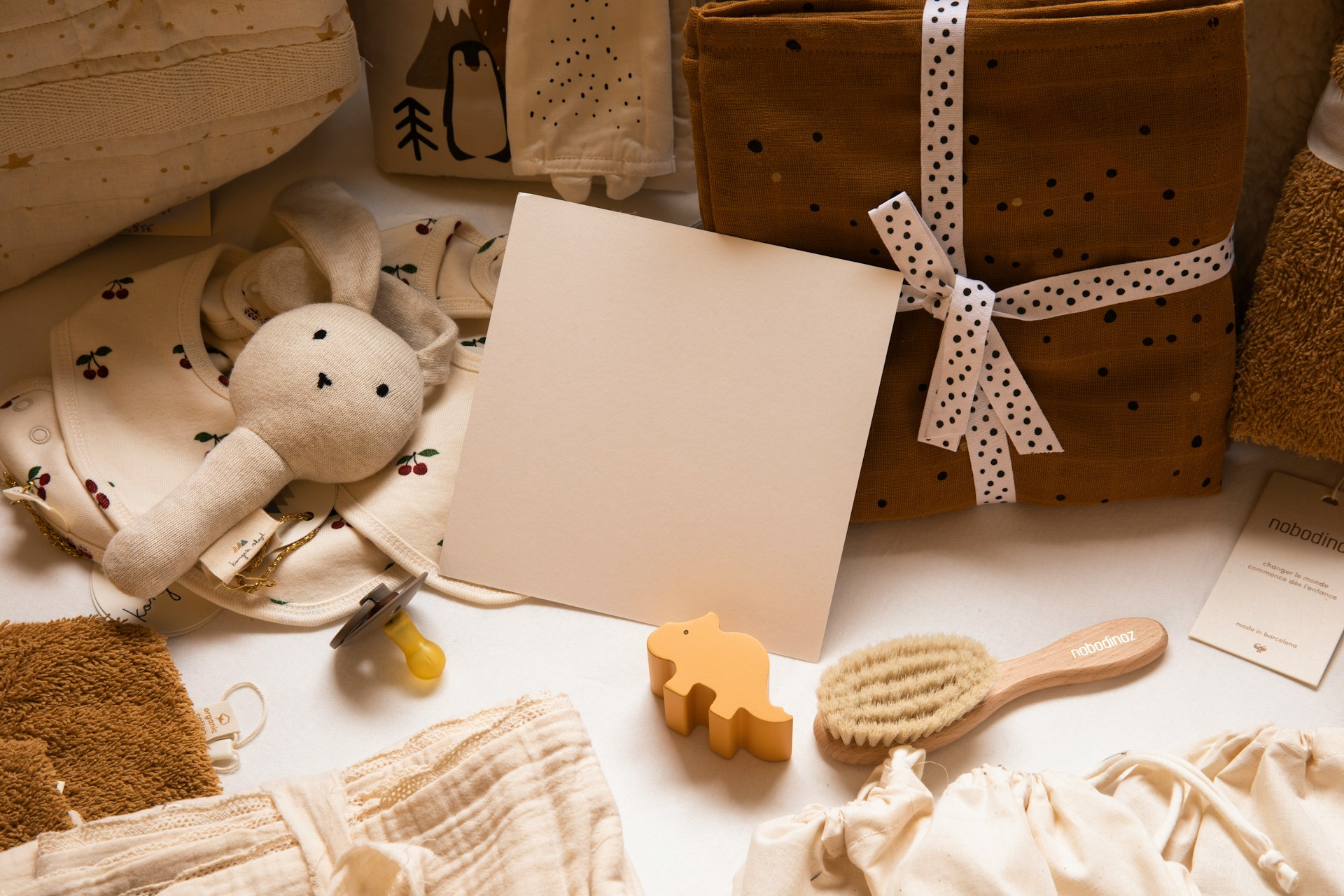

The list starts small. A few sleepsuits, some diapers, a place for the baby to sleep. Then someone mentions a bottle steriliser, someone else asks if you have a nasal aspirator, your mother-in-law arrives with opinions about muslin wraps, and suddenly you’re three hours deep into Daraz at midnight wondering whether the Rs. 12,000 stroller is worth it and whether imported Pampers are better than the Nepali alternatives.
Every new parent in Kathmandu hits this wall. The checklist grows faster than your confidence, and the city’s baby product market, which ranges from solid specialty shops to general retailers with limited product knowledge, doesn’t make it easier. This guide cuts through that. What to buy first. What it costs. Where to find it. And what can genuinely wait. For the quick version, see the baby essentials checklist.
At a glance
- Sleeping: firm crib or bassinet, fitted sheets, swaddles (wait on: musical mobiles, sleep trainers)
- Feeding: breast pump or bottles and steriliser, burp cloths (wait on: highchair until 6 months, food processors)
- Clothing: 6 to 8 bodysuits, 4 to 6 sleepsuits, hats, socks (wait on: anything decorative under 3 months)
- Diapering: diapers (small initial stock), wipes, rash cream, change mat (wait on: diaper bin, automated warmers)
- Safety and health: thermometer, nasal aspirator, nail care kit (wait on: baby monitor, usually unnecessary in joint households)
- Mobility: baby carrier (wait on: stroller, reassess at month 2 to 3)
Start here: sleeping
Sleep is where parents lose their minds first, which makes it the right place to begin. A newborn sleeps 16 to 18 hours in 24 hours, but almost none of it in long stretches. What you need is a surface that is flat, firm, and free of anything that can bunch up around the baby’s face.
A firm bassinet or crib with a fitted sheet is enough. In Kathmandu’s joint households, babies often sleep in the same room as parents for the first several months, which means you don’t need a large, permanent cot immediately. A compact bassinet (available in the Rs. 4,000 to Rs. 8,000 range at most Kathmandu baby stores) works well for the first three months.
Swaddles matter more than most new parents expect. A swaddled newborn settles faster because the firm wrap mimics the feeling of the womb. Cotton muslin swaddles are what most pediatricians recommend, and they’re also the right choice for Kathmandu’s climate. During the monsoon months, June through August, humidity makes any synthetic or fleece wrap miserable for a small baby whose heat regulation is still developing. Light cotton is the answer to everything from June to September. Buy four to six swaddle cloths before the birth.
What can wait: sound machines, premium sleep trainers, elaborate mobiles. They are not useless, but they are not month-one necessities.
Feeding: the decision that shapes everything else
If you are breastfeeding, a good breast pump is the item that changes your first three months most noticeably. Hospital-grade electric pumps are available in Kathmandu from stores like Kuddle Kubs and Kids Pasal; a reliable double-electric pump runs between Rs. 8,000 and Rs. 20,000 depending on the brand. If budget is a concern, a manual pump in the Rs. 1,500 to Rs. 3,000 range handles occasional expression well enough, but for mothers returning to work or building supply, the electric version pays for itself in time saved.
For bottle feeding, Pigeon and Philips Avent are the two brands consistently stocked and consistently reliable in Kathmandu. Both are widely available and both are BPA-free, which is the certification you should check on any feeding equipment. A bottle brush and a steam steriliser round out the feeding kit. The electric steriliser is worth the Rs. 3,000 to Rs. 5,000 cost: high humidity and Kathmandu’s tap water quality make thorough sterilisation more important here than in drier climates.
Burp cloths are the most underrated item on any feeding list. Buy ten. Not two, not four. You will use all ten, often on the same day.
Highchairs and blenders for solid foods can wait until the baby is around six months. Buying them in the first week is common and unnecessary.
Clothing: buying for Kathmandu’s climate, not for the catalog
Newborn clothing in Nepal has one reliable problem: sizing. Clothing marked as “Newborn” or “0-3 months” often skews toward smaller South Asian builds, which means an average-weight baby at birth may find some newborn-size items snug from day one. Buy a mix: half in newborn size, half in 0-3 months, and do not stock up on any single size before you see how your baby is built.
For fabric, cotton is not optional. Kathmandu’s monsoon season brings sustained humidity even without rain, and a baby in a synthetic blend during July will be sweaty and uncomfortable within minutes of being dressed. The sign that a baby is overdressed is simple: if the neck feels damp and warm, remove a layer. If the chest and hands feel cool, add one.
For the first two months, you need: six to eight short-sleeved cotton bodysuits, four to six cotton sleepsuits (the zip-front ones are genuinely easier at 3am), cotton hats for the first few weeks, and two to three pairs of scratch mitts. Socks in a sensible quantity, say four to six pairs, because they disappear at a rate that defies physics.
A note on festival dressing: Kathmandu’s baby clothing market carries a significant amount of heavily embroidered, ceremonial-style infant clothing because gifting plays a large role in how Nepali families celebrate a new baby, particularly around Dashain. For a baby’s first Dashain, relatives often arrive with formal outfits intended for photographs and the family rounds. See our Dashain gift guide for babies for what works by age. Focus on practical everyday items first, and let the festival clothing arrive as gifts.
Kokroma makes cotton infant clothing suited to Kathmandu’s climate. Their bhoto sets for younger babies use natural cotton. Local brands in this space often offer better climate-appropriate fabric choices than some imports designed for colder European or North American markets.
Diapering: the category where you do not need to overthink
Buy a small initial stock of diapers in newborn size: two to three packs. Not more. Newborns grow out of newborn-size diapers faster than most parents expect, and a 10-pack sitting unused is just money on a shelf. Once you see the baby’s growth pattern in the first two weeks, stock up on the next size.
Premium brands available in Nepal include Pampers and MamyPoko at the higher end. Local and regional options, Aiwibi and Himalaya among them, offer reasonable absorbency at a lower price point. Diaper prices across Kathmandu run from roughly Rs. 250 for smaller economy packs to Rs. 2,800 for larger premium packs. If you have a baby with sensitive skin, the premium brands tend to cause fewer reactions; if the skin is tolerating a mid-range option well, there is no particular reason to pay more.
Wipes: unscented, alcohol-free. This is not a preference, it is a pediatric recommendation for newborn skin. The fragrant wipes burn on the very small percentage of babies with reactive skin, and you won’t know which kind of baby you have until you’re already at the pharmacy at midnight.
A good rash cream, Bepanthen or Sudocrem are both available in Kathmandu, and a firm changing mat complete the diapering kit. Heated diaper warmers and automated diaper bins are the most popular items that new parents almost unanimously stop using within six weeks.
Safety, health, and the items that earn their space
Three items should be within arm’s reach from the first night home.
A digital thermometer. Available at every pharmacy in Kathmandu for Rs. 500 to Rs. 1,200. Rectal temperature is the most accurate for newborns; the underarm method is easier and close enough for everyday use. If the reading is above 38C in a baby under three months, that’s a call to your pediatrician, not a wait-and-see.
A nasal aspirator. Newborns are obligate nasal breathers: they can only breathe through their noses, which means a blocked nose is a feeding and sleeping problem, not just a discomfort. The manual bulb-type aspirator works. The NoseFrida type, which several Kathmandu parents describe as feeling strange to use but more effective in practice, is available at better-stocked baby stores.
A baby nail care kit, specifically one with a small emery board or the rounded safety scissors intended for newborns. Baby nails grow faster than any parent is prepared for, and a scratch on the baby’s face at day four is not uncommon.
On baby monitors: In most joint-family Kathmandu households, a baby monitor is unnecessary. If there is always someone within earshot, the monitor adds anxiety more than security. Parents in nuclear households or with hearing impairments have a real use for one. Everyone else can revisit it at month three.
When choosing any health or skincare product, the certifications that matter are BPA-free for feeding equipment, dermatologically tested for skincare and wipes, and the absence of parabens and SLS in wash products. These labels are not marketing: they reflect actual ingredient standards. Any reputable Kathmandu baby store should be able to confirm these details for the products they stock.
Where to buy in Kathmandu
Kathmandu now has a solid range of options across price points.
For specialty baby retail with product knowledge, Kuddle Kubs carries feeding essentials, clothing, toys, and nursery gear and handles same-day delivery within Kathmandu. For parents who want to see and touch products before buying, staff can answer questions about the difference between two sterilisers before you buy.
Kids Pasal and Baby Shop Nepal also carry a broad range of products. For household goods and branded baby products alongside your regular grocery run, Bhatbhateni and Big Mart are reliable. For international products at higher price points, Ubuy Nepal and Daraz list imported brands.
One thing worth knowing about shopping for baby products in Kathmandu: imported items sometimes arrive at three times their country-of-origin price. This is not unusual for a landlocked country with import duties, but it means the Rs. 4,000 local cotton sleepsuit is not necessarily worse than the Rs. 12,000 imported version. Often it is better suited to the climate.
What to involve the joint family in (and what to decide yourselves)
Kathmandu’s baby product market is often navigated as a group project. Mothers, mothers-in-law, aunts, and family friends all arrive with opinions, gifts, and occasionally conflicting advice. Some of it is useful: older family members often have strong opinions about fabric and warmth that are climate-appropriate, even if they predate the current understanding of swaddle technique.
The items worth deciding as a couple before the extended family arrives: the sleeping arrangement (whether co-sleeping, bassinet, or crib), the feeding plan, and the brand of diapers and skincare products. These are the categories most likely to attract well-meaning interference, and having a decided position before the baby arrives saves several arguments.
The items worth leaving open for gifting: festival clothing, toys (from three months onward), and higher-cost items like a stroller or carrier that family members may want to contribute to as a group gift.
What can wait
The items below appear on most checklists. None of them need to be bought before the baby arrives, and some are best assessed only after you know the specific baby you have.
A stroller works well in Kathmandu’s flatter neighborhoods, but the city’s stepped alleys and uneven footpaths in older areas like Thamel or Patan make a baby carrier more practical for the first several months. Assess at month two. A baby carrier in the Rs. 2,500 to Rs. 6,000 range should be your first mobility purchase.
A highchair waits until around six months, when solids begin. A baby bath tub is convenient but not necessary if you have a large sink or basin available. A breast milk storage system is only necessary if you are expressing in significant volume. Bouncer seats and swings: some babies love them, some are indifferent. Buying before birth is a gamble. Many families borrow these from a relative or friend for the first trial.
The useful frame for all of this is simple: buy what you need for the first two weeks, then assess. The Kathmandu baby market has enough reliable options that restocking is easy. The cost of an overstuffed nursery before you know what gets used is higher than the inconvenience of one extra delivery.
For a broader overview of what is available across Nepal, see the Nepal baby products guide. Browse the full range at the Kuddle Kubs shop.
