
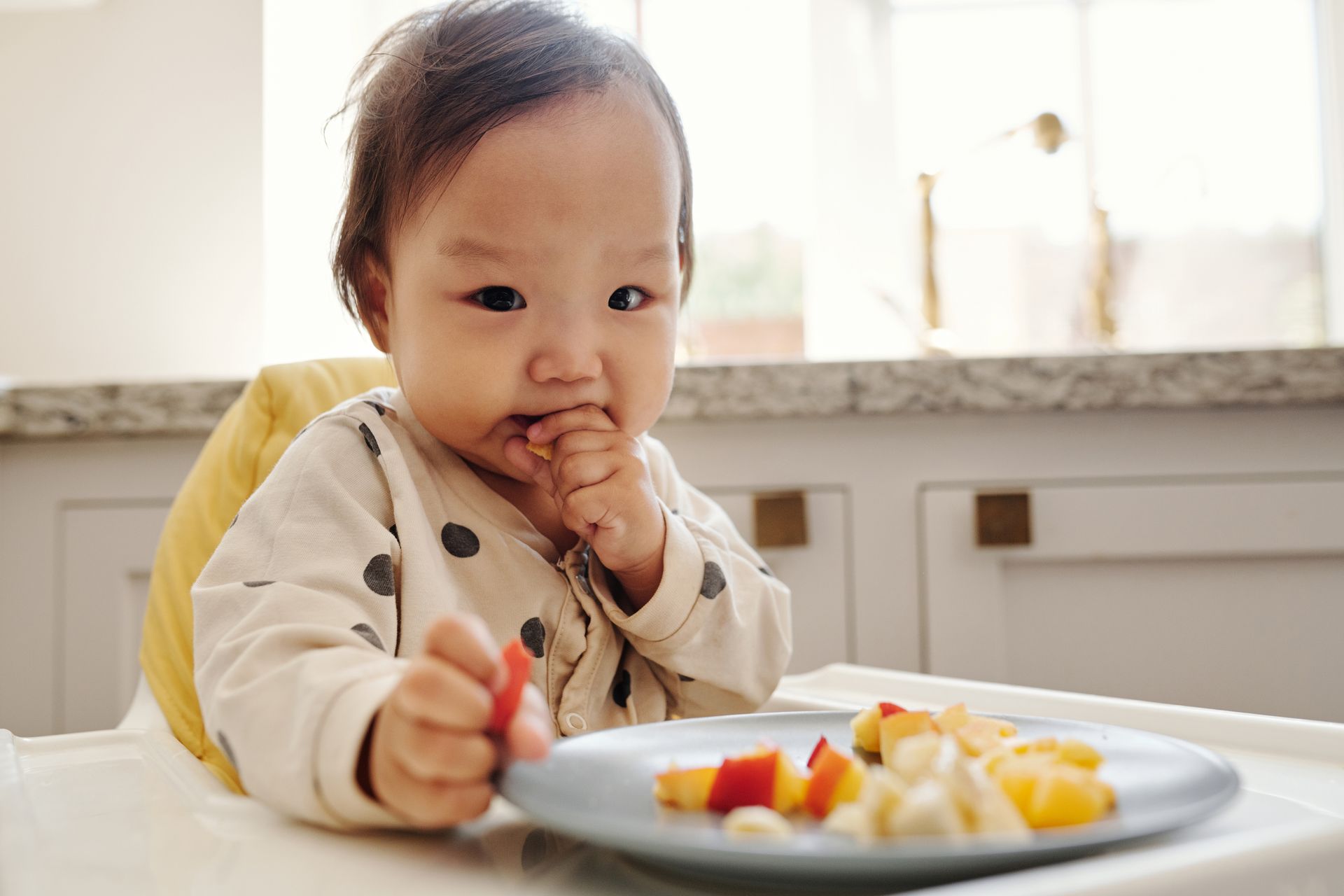

The first thing most parents say when they hear about baby led weaning is some version of: but what about choking?
It’s the right question. And the answer changes the way you sit at every meal for the first few months.
What Baby Led Weaning Is
At six months, most babies have the developmental readiness for solid food: they can sit upright without support, they’ve lost the tongue-thrust reflex, and they show interest in what’s on your plate. Baby led weaning (BLW) begins here, with the baby feeding themselves appropriate foods from the start, rather than receiving purees on a spoon.
The parent prepares the food, places it within reach, and mostly watches. That’s it.
What it is not: a fast route to stopping breastfeeding or formula. Milk remains the primary nutrition source for most of the first year. Solid food at this stage is exploratory. Most parents doing BLW report that in the first week, very little is actually swallowed. Food gets sucked, squashed, examined, and dropped. One parent documented her first week: “95% of it ended up smashed on her face, in her hair, caught in her bib, or on the floor.” By week two, chewing had improved and she noticed changes in nappies confirming food was going in.
The Fear Most Parents Have
Gagging and choking are not the same thing. Understanding that distinction is the most useful thing a parent can do before starting BLW.
Gagging is a protective reflex. When a baby moves food too far back in their mouth before they’re ready to swallow, the gag reflex moves it forward. It looks alarming. The eyes water, the face reddens, the sounds are dramatic. One parent described it as “extreme prolonged gagging, red around the eyes and eyes watering.” Another said she was “on the verge of a panic attack watching my baby put food in her mouth” until she understood what gagging actually was.
What she learned: “I educated myself on the difference between choking and gagging. Gagging is a good thing. It’s the reason babies gag, to prevent choking.”
Choking is different. Choking means the airway is fully or partially blocked. It is silent or near-silent. If your baby is making noise, they are not choking.
That distinction does not eliminate the anxiety. But it reframes what you’re watching at mealtimes, which changes how you sit through those first weeks. A practical step many parents take before starting: complete a basic infant first aid course that covers how to respond if a baby does choke. One parent described it as giving her “enough confidence to start, because in the event that we had a scare, I’d know how to handle it.”
BLW in a Nepali Family
In many Nepali families, the transition to solid food is already a cultural event before it becomes a daily practice. The Pasni ceremony marks a baby’s first taste of solid food, at five months for girls and six months for boys. The first bite is traditionally rice mixed with ghee, offered by the baby’s paternal aunt while the extended family watches.
BLW sits alongside this tradition without conflicting with it. Pasni marks the beginning. BLW is the approach you use from that point forward.
The more common challenge is what happens during regular mealtimes when older family members are present. Grandmothers often have their own views on how babies should be fed, sometimes suggesting rice in milk as early as three or four months. Research on South Asian feeding practices notes that extended family influence on first foods is significant, with grandmothers often recommending earlier introduction than current guidelines suggest.
A brief conversation with the family before starting, explaining what gagging looks like and why it’s a protective reflex, tends to be far more useful than trying to explain it mid-meal when everyone is watching.
First Foods From a Nepali Kitchen
Your kitchen already contains most of what makes a strong BLW start.
Soft-cooked vegetables: sweet potato, pumpkin, carrot, and brinjal all steam or boil to the right texture. Cut them into strips thick enough for the baby to grip with their palm, not small pieces.
Dal and rice: khichdi pressed into a firm consistency and shaped into fingers works well as an early food. Soft-cooked dal served on a tray for the baby to explore with their fingers is a reasonable first texture for many families.
Fruit: banana in wedges, ripe mango in strips, papaya. All soft enough at room temperature without preparation.
Roti and chapati: strips work well. The texture gives grip and the baby can tear pieces at their own pace.
Spices: not a problem. Small amounts of turmeric, cumin, and garlic in cooked food introduce familiar tastes from the family kitchen. There is no requirement for bland food at this stage. Babies whose first foods include mild spices often transition to family meals more smoothly.
Foods to avoid in the first months: whole grapes, cherry tomatoes, hard raw vegetables, and anything with added salt or sugar.
What the First Few Weeks Look Like
Week one: very little swallowed. Food is explored more than eaten. Week two: chewing improves, nappies change. Week three onward: textures broaden, appetite starts to assert itself.
The mess is real and worth planning for. A mat under the high chair makes cleanup manageable. The anxiety also eases. Most parents report that by the fourth or fifth week, mealtimes feel significantly less fraught. The baby has demonstrated they can handle food. The gag reflex has been observed and understood. The rhythm becomes normal.
Kuddlekubs stocks feeding equipment and baby essentials selected for Nepal’s conditions. Browse the feeding supplies range for bowls, spoons, and self-feeding tools suited to BLW. If you’re preparing to start solids and want guidance on what to have on hand, reach out.
